English Pool vs. American Pool: Equipment Comparison (Tables, Balls, Cues, Pockets)
Two Games, Two Completely Different Setups
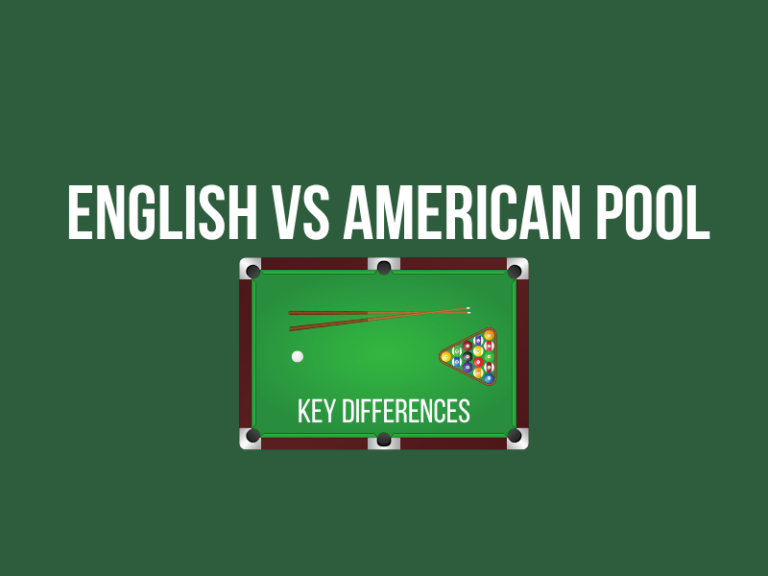
Walk into a pub in Manchester and walk into a pool hall in Las Vegas, and you’ll find games that share a name but almost nothing else. English pool and American pool, most commonly played as eight-ball on both sides of the Atlantic, use different tables, different balls, different cues, and different pockets. These aren’t minor variations. The equipment differences are significant enough that a competent player in one discipline can genuinely struggle when they first pick up the other game.
This comparison breaks down every major piece of equipment side by side, explains why those differences exist, and gives you a clear picture of what to expect if you’re crossing over from one discipline to the other, or simply trying to understand what separates these two distinct sports.
The Tables: Size, Slate, and Playing Surface
The most obvious difference between the two games starts with the table itself. English pool tables are significantly smaller than their American counterparts. Standard English pool tables measure 7 feet by 4 feet (the “full size” in the British game), though 6-foot tables are extremely common in pubs and clubs. Some venues run even smaller 5-foot tables, though these are generally considered practice or home setups rather than competitive surfaces.
American pool tables come in 7-foot, 8-foot, 8.5-foot (often called “oversized”), and 9-foot configurations. The 9-foot table is the tournament standard for American nine-ball and eight-ball at professional level. Even the smallest American table, the 7-footer, has notably different proportions to an English 7-foot table because the pocket size and cushion profiles are different, which changes the entire playing geometry.
Cushion Profiles
The rubber cushions on English and American tables use different profiles. English tables use the K-66 cushion profile, a tighter, more angled rubber that produces a quicker, livelier rebound. American tables traditionally use the K-55 profile, which is a softer, rounder cushion that gives a slightly different angle of rebound and works better with the larger American balls. Getting the cushion profile wrong, such as fitting American-spec rubber to an English table, produces unpredictable rebounds and effectively ruins the playing surface.
Cloth and Playing Speed
English pool tables are almost universally covered in a napped cloth, a woven fabric with a directional grain, similar to snooker cloth but typically coarser. This nap affects how the balls travel: shots played with the nap run faster and straighter, while cross-nap shots curve slightly. Players who understand the nap use it tactically, particularly for positional play and safety shots. American pool tables use a worsted or napless cloth, which is smoother, faster, and has no directional bias. American cloth produces a more consistent, predictable roll in any direction, which is one reason long, precise positional play is more central to the American game. If you’re interested in how cloth affects play, our table felts buyer guide covers this in depth.
Bed and Construction
Both disciplines typically use slate beds at the competitive level, though English pub tables frequently use MDF or resin composite beds at lower-end venues. A genuine slate bed, either single-piece or three-piece, gives a flat, consistent surface that composite alternatives can’t fully replicate over time. American pool tables at any serious level will almost always be slate-bedded. The weight difference is considerable: a full-size American slate table can exceed 400kg, while a 6-foot English pub table might come in under 150kg.
The Balls: Size Makes All the Difference
This is where the two games diverge most sharply in terms of how they actually play. English pool balls measure 2 inches (50.8mm) in diameter. American pool balls are 2.25 inches (57.15mm). That 0.25-inch difference doesn’t sound dramatic, but it fundamentally changes the game.
On a smaller English table, smaller balls mean more open space on the cloth, more room to manoeuvre, and more delicate positional play. On a large American table, bigger balls fill the pockets more generously and demand a different style of power and spin application. The smaller English ball is also lighter, which affects how much cue power is needed and how the cue ball responds to side, top, and screw.
The English Ball Set
A standard English pool set consists of 16 balls: one yellow (or yellow-striped) set, one red (or plain red) set, and a white cue ball. The two colours replace the American convention of solids and stripes. Traditional sets use plain yellow and plain red balls with spots on the cue ball, though many sets now use a yellow-and-white striped pattern on one group. The cue ball in English pool is typically the same size and weight as the other balls, there’s no oversized or underweight cue ball as you might find on coin-operated American tables with ball-return mechanisms. For a detailed look at what’s available, see our English pool balls buyer guide.
The American Ball Set
American pool uses 16 balls: seven solids (numbered 1-7), seven stripes (9-15), the 8-ball, and the cue ball. The cue ball is the same diameter as the object balls at 2.25 inches. On coin-operated American tables, a slightly larger or heavier cue ball is sometimes used so the table’s magnetic or size-based return mechanism can separate it from potted balls, something English pub tables handle differently, usually through a ball-return chute or simple drop pockets.
How Ball Size Affects Play
Switching from English to American balls is disorienting at first. The larger American ball sits differently in the pocket jaw, which means you can get away with shots that would rattle out on an English table, but it also means that pots which look comfortable on a small English table can miss on a big American surface if your cueing isn’t precise. Applying side spin (english) on American balls requires more cue speed to achieve the same deflection effect, and the larger mass of the ball means miscues feel different. Going the other way, from American to English, players often find the smaller ball more sensitive to off-centre striking, and positional control demands more finesse.
The Cues: Length, Weight, and Tip
English and American cues are built to different specifications, and using the wrong cue for the game you’re playing puts you at a real disadvantage.
English Pool Cues
A standard English pool cue runs 57 inches (145cm) in length, the same as a snooker cue. Weight typically falls between 16oz and 18oz, with 17oz being the most common preference among club players. The defining feature of an English cue is its small tip diameter, which is usually 8mm to 9mm. This narrow tip suits the smaller English ball and allows precise contact point selection, which matters a great deal when you’re applying screw, stun, or side on a ball that’s only 50.8mm across.
English cues are almost always two-piece, with an ash or maple shaft. Ash is the traditional choice, the wood’s natural bend gives it a lively feel, and many players specifically choose shafts with visible grain for aesthetic and tactile preference. The joint is typically a brass-and-wood splice or a threaded insert. Ferrules are usually brass, though nylon is increasingly common on mid-range cues. You can find detailed buying advice in our English pool cues buyer guide.
American Pool Cues
American cues are also typically 57-58 inches in length but are heavier, most commonly ranging from 18oz to 21oz. The key difference is the tip: American cues run a tip diameter of 12mm to 13mm, which suits the larger 2.25-inch ball. The wider tip makes it easier to deliver power shots with accuracy and to apply controlled spin over the larger striking surface. American cues usually feature a maple shaft, harder and more uniform than ash, with a stainless steel or nylon-reinforced ferrule. The joint connection is typically a stainless steel pin with a collar, making for a very solid connection between butt and shaft.
Can You Use One Cue for Both Games?
Technically, yes, but you’ll be compromising in one direction or the other. Using a narrow-tipped English cue on American balls increases miscue risk, especially on power shots or heavy side applications. Using a wide-tipped American cue on English balls gives you less precision on contact point selection, which hurts your ability to apply subtle spin to the smaller ball. If you’re serious about either game, use the correct cue. There’s no real shortcut here.
Chalk
Both games use chalk to reduce tip-to-ball friction and prevent miscues. English players most commonly use Master chalk or Taom, while American players have traditionally leaned toward Master chalk as well. The chalk application matters: with a small 8mm English tip, you need to chalk thoroughly and evenly to avoid edge miscues when applying side. The tip’s small surface area leaves less margin for error. See our chalk buyer guide for more detail on what’s available across disciplines.
The Pockets: Shape, Size, and How They Change the Game
Pocket design is arguably the most tactically significant equipment difference between English and American pool, and it’s one that players crossing over consistently underestimate.
English Pool Pockets
English pool pockets are smaller and have a more rounded, shelf-like pocket mouth. The standard pocket opening on a full-size English table is roughly 3.5 inches (89mm) across, not much bigger than the 2-inch balls going into them. This tight tolerance means pocket jaws are punishing: a ball that catches the jaw at anything other than a clean angle will rattle and stay out. The rounded shelf also means that balls can check back off the cushion behind the pocket opening and return to the table if they’re travelling too fast. This rewards controlled shot-making over raw power and makes positional play around the pockets more strategic.
American Pool Pockets
American table pockets are noticeably more generous. On a standard 9-foot American table, corner pockets measure approximately 4.5 inches (114mm) and side pockets are slightly wider. The pocket mouth is also sharper and more funnel-like, angled rubber cushions at the pocket jaw guide balls in rather than spitting them back. This forgiving design is one reason American pool accommodates power play: you can hit hard at a ball near the pocket, and even an imperfect entry angle will often find the pocket rather than rattle out. Players coming from English pool sometimes find this frustrating at first because instinctive caution at the pockets isn’t necessary, and strategic play around the pocket jaw needs to be entirely rethought.
Drop Pockets vs. Ball-Return Systems
English pub tables commonly use either drop pockets, where potted balls collect in a small bucket under each corner, or a gravity-fed ball-return rail that feeds all potted balls to one end of the table. Coin-operated English tables use a ball-return mechanism that separates the cue ball from object balls using size or magnetic detection. American pool tables at serious venues typically use gravity-fed ball returns, while coin-operated American tables use the same cue-ball separation technology. None of this affects play directly, but it explains some of the cue-ball design differences mentioned in the balls section above.
Practical Takeaways for Players Crossing Over
If you’re an experienced English pool player picking up American pool for the first time, expect the larger balls and more forgiving pockets to feel initially easier, but the larger table will expose any weaknesses in your positional play. Your power game will also need recalibration; the bigger, heavier balls need more cue speed to achieve the same screw or stun effects.
If you’re coming from American pool to English, the small pockets and smaller balls will demand much more precision at the table. Your long potting accuracy needs to be sharper, and you’ll need to develop a feel for the napped cloth, which punishes careless direction of play. The lighter cue and smaller tip will also require adjustment, take time to get comfortable before jumping into competitive play.
Neither game is harder than the other in an absolute sense. They reward different skills, and genuine crossover players who master both are genuinely rare.
Frequently Asked Questions
Can I use an American pool cue to play English pool?
You can, but it’s not recommended for serious play. The wider tip (12-13mm) gives you less control over contact point selection on the smaller 2-inch English ball, which hurts your ability to apply precise spin. You’ll also find the heavier weight makes fine touch shots harder to execute. Get a proper English cue, 8-9mm tip, 16-18oz, if you’re playing English pool regularly.
Are English pool tables and American pool tables the same size?
No. Standard competition English pool tables are 7 feet by 4 feet. American tournament tables are 9 feet by 4.5 feet. Even where both games use a “7-foot” table, the pocket sizes, cushion profiles, and cloth types are different, making the two surfaces play quite differently. The American 7-footer is still a significantly larger playing area when you account for the pocket geometry.
Why are English pool balls smaller than American pool balls?
The smaller ball size (2 inches vs. 2.25 inches) is calibrated to suit the smaller English table and tighter pockets. On a 6- or 7-foot table with 3.5-inch pockets, a 2-inch ball creates a challenging but fair margin for error. Putting 2.25-inch American balls on an English table would make pocketing too easy and positional play more cramped. The equipment across both disciplines is designed as a coherent system, change one element and the balance shifts.