
Ronato Alcano
Ronato Alcano is one of the most celebrated pool players to emerge from the Philippines, a country that has produced an extraordinary concentration of elite billiards talent. Known for his composed demeanor under pressure and a technically refined all-around game, Alcano earned global recognition…
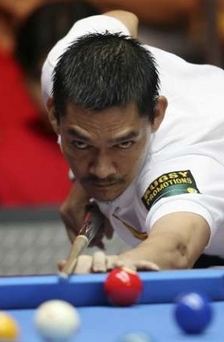 Wikimedia Commons, CC BY-SA
Ronato Alcano at a Glance
- Nationality – Filipino
- Born – 7 February 1977
- Nickname – The Ronnie
- Turned Professional – Late 1990s
- World Pool Championship – 2007
- Known For – Multiple-time Philippines national champion
Early Life and Background
Ronato Alcano grew up in the Philippines during an era when pool halls were social hubs and competitive battlegrounds in equal measure. The country’s billiards culture is deeply embedded in everyday life, and talented young players are identified early and tested constantly in local and regional competition. Alcano was no different. He absorbed the game in its most demanding informal settings, where the lessons were not always gentle and the competition was relentless.
Filipino players of his generation grew up watching legends like Efren Reyes and Django Bustamante, and the influence of those players shaped an entire school of thought around stroke mechanics, safety play, and the mental side of competition. Alcano developed his game against this backdrop, building a foundation that was technically sound but also streetwise in the way that only constant competitive pool can produce.
He turned professional during the 1990s and began making his mark on the Asian and international circuits. Before the biggest titles came, he spent years accumulating experience and building a reputation as a dangerous opponent capable of beating anyone on a given day.
Career Highlights
The defining moment of Ronato Alcano’s career came at the 2007 World Pool Championship, held at the Galatasaray Sports Hall in Istanbul, Turkey. The World Pool Championship, sometimes called the WPA World Nine-Ball Championship at the time, is one of the sport’s crown jewels, drawing the best players from every corner of the globe. Alcano navigated a demanding field with patience and precision, producing some of the finest pool of his career when it mattered most.
His run through the tournament was not without difficulty. He faced high-level opponents throughout and was tested in ways that revealed the depth of his competitive character. When the final was decided, Alcano stood as world champion, a result that resonated deeply not only for him personally but for Philippine pool as a whole. The Philippines had already celebrated multiple world champions, and Alcano’s name joined that distinguished roll.
Beyond the World Pool Championship, Alcano competed extensively on the Asian circuit and in major international events. He was a regular presence in the World Pool Championship field across different years, demonstrating that his 2007 title was not a one-off performance but the peak of a consistent career. He also competed in team formats and other ranking events, always carrying the Filipino flag with distinction.
His longevity on the professional circuit is notable. Pool at the highest level demands not just skill but adaptability, because formats, equipment, and fields all shift over time. Alcano remained competitive well beyond his peak years, which speaks to the quality of his fundamentals and his understanding of the game at a structural level.
Alcano was also part of the broader generation of Filipino players who helped the country cement its global reputation in pool. Alongside Reyes, Bustamante, Francisco Bustamante, and others, he contributed to a remarkable chapter in the sport’s history where the Philippines dominated international competition in ways that had no real parallel in any other country outside of the very top pool-playing nations.
Playing Style and Technical Approach
Ronato Alcano plays a controlled, methodical style that prioritizes cue ball management above raw aggression. Where some players rely on power or on gambling with low-percentage shots, Alcano has always preferred to dictate terms through position play, keeping the cue ball in areas of the table that give him continuity and minimize risk.
His stroke is smooth and repeatable, the kind built through thousands of hours of deliberate practice rather than natural flair alone. Filipino pool players of his school tend to share an emphasis on fundamentals: a stable bridge, a consistent pre-shot routine, and a stroke that does not change under pressure. Alcano exemplifies those qualities. When the match is tight and the crowd is watching, his execution does not visibly deteriorate, which is one of the hardest things to achieve in any cue sport.
His safety game is particularly worth noting. At the elite level, nine-ball pool is not purely a potting contest. The ability to recognize when to play a safety rather than attempt a difficult shot, and then to execute that safety effectively, separates good players from truly elite ones. Alcano reads the table quickly and makes sound decisions, which has allowed him to manage matches against players who might outgun him in pure potting ability on a given day.
Like many of the great Filipino players, he is adaptable to different table conditions and equipment. This matters because international tournaments are played on a variety of table brands and cloth types, and players who are rigidly dependent on one set of conditions tend to struggle when things change. Alcano’s flexibility in this regard reflects a genuine mastery of the game’s principles rather than familiarity with just one environment. Players serious about understanding how surface choices affect play might find it useful to read up on table felts, since cloth speed and texture have a measurable impact on cue ball behavior at the professional level.
His cue action in particular is a model of economy. There is no unnecessary movement, no wasted energy. He sets up, addresses the ball, and delivers the stroke with the kind of confidence that only comes from genuine repetition and self-trust. For amateur players looking to develop similar consistency, investing in quality equipment including a well-fitted pool cue suited to their stroke is one of the more important early decisions they can make.
Legacy and Standing in the Sport
Ronato Alcano’s legacy in billiards is built on two pillars: his World Pool Championship title and his role as part of the extraordinary Filipino generation that shaped the modern game. He may not carry the same global name recognition as Efren Reyes, who achieved a kind of mythological status in pool, but within the sport’s community, Alcano is respected as a genuine world-class competitor who won the sport’s biggest event and did so convincingly.
For the Philippines, his win in 2007 was another chapter in a story that the country’s pool fans have every right to celebrate. The depth of talent the Philippines has produced across multiple decades, in multiple formats of the game, is genuinely remarkable and Alcano is a proper part of that narrative.
He also serves as an example for younger Filipino players of what is possible. Pool is not a sport with the same infrastructure support that mainstream sports enjoy in many countries, and careers are built through persistence and competitive toughness as much as talent. Alcano’s path from local halls to world champion is a concrete illustration of what that path looks like.
Frequently Asked Questions
What is Ronato Alcano best known for?
Alcano is best known for winning the World Pool Championship in 2007, which stands as the defining achievement of his professional career. The title confirmed his standing among the elite players of his generation.
Where is Ronato Alcano from?
Ronato Alcano is from the Philippines, a country with one of the richest pool traditions in the world. The Philippines has produced numerous world champions across different formats of the game.
What style of pool does Ronato Alcano play?
Alcano plays a controlled, position-focused style that emphasizes cue ball management and sound decision-making over raw aggression. His safety game and consistent stroke mechanics are defining features of his approach.
How does Alcano compare to other Filipino pool legends?
While Efren Reyes and Django Bustamante are generally regarded as the most globally recognized Filipino players, Alcano is respected as a genuine world champion in his own right. He is part of the same remarkable generation that made the Philippines the dominant force in international pool for several decades.
Has Ronato Alcano competed at the Mosconi Cup?
The Mosconi Cup is a competition between Europe and the United States, so Filipino players including Alcano are not eligible to compete in that event. Alcano’s international appearances were primarily in open world championships and Asian circuit events where Filipino players could participate.