
Ray Reardon
Ray Reardon is the reason snooker has a folklore. Before the sport had television contracts, before it had household names beyond Britain, before anyone thought a man potting coloured balls could fill an arena, Reardon was doing exactly that. A former coal miner from the Welsh valleys, he turned…
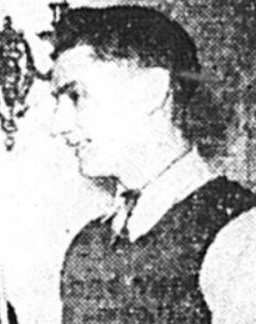 Wikimedia Commons, CC BY-SA
Ray Reardon at a Glance
- Nationality – Welsh
- Born – 8 October 1932, Tredegar, Monmouthshire, Wales
- Turned Professional – 1967
- Career World Titles – 6
Early Life
Reardon was born on 8 October 1932 in Tredegar, a coal mining community in Monmouthshire, Wales. His parents, Ben and Cynthia Reardon, raised him in a working-class environment where the local workmen’s institutes served as social hubs for miners and their families. It was in those institutes that Reardon first found snooker. At eight years old, an uncle introduced him to the game. By ten, he was practising cue sports twice a week at the Tredegar Workmen’s Institute, sometimes on scaled-down billiard tables suited to a child’s reach.
The passion took hold immediately and never let go. Through his childhood and teenage years, Reardon spent every spare hour he could find at the table, dreaming of a professional career at a time when professional snooker barely existed as a viable path. He worked the mines alongside that ambition, grinding out shifts underground while grinding out frames above ground whenever possible. The discipline required to maintain that balance, physical labour by day and competitive snooker whenever time allowed, forged a mental toughness that would define his professional career.
His amateur record was exceptional. He won the Welsh Amateur Championship five years in a row in the early 1950s, a run that announced him as a generational talent even before he had turned professional. Those titles confirmed what anyone who had watched him practise already suspected: Reardon was not simply good for Tredegar. He was good, full stop.
Career Highlights
Reardon turned professional in 1967 at the age of 35, stepping into a snooker landscape that was still finding its footing. Tournament opportunities were limited, prize money was modest, and the sport had not yet captured the mainstream television audience that would eventually transform it. None of that slowed him down.
What followed was one of the most remarkable sustained runs in the history of cue sports. Reardon won the World Snooker Championship six times, in 1970, 1973, 1974, 1975, 1976, and 1978. That collection of titles, concentrated almost entirely within a single decade, earned him the status of the sport’s dominant force throughout the 1970s. At his peak he was ranked world number one, a position he held with an authority that few players in any era of snooker have matched.
The World Snooker Championship at the Crucible Theatre in Sheffield became the stage on which Reardon built his legend. The Crucible era began in 1977, and Reardon was already a multiple world champion by the time it opened. He adapted without complaint, continuing to compete at the highest level well into the 1980s. Perhaps the most remarkable statistical footnote of his career is that he reached the World Championship final in 1982 at the age of 49, losing to Alex Higgins in one of the sport’s most celebrated finals. That a man approaching 50 could compete for the sport’s biggest prize speaks to both his longevity and the calibre of his technique.
Beyond the world title, Reardon was a consistent presence at ranking events throughout his professional career. He was central to the television boom that transformed snooker in Britain during the late 1970s and early 1980s, a period when the sport became genuine primetime entertainment and players became public figures. Reardon was among the most recognisable faces of that era, partly because of his results and partly because of the persona he carried so naturally.
Later in his career, Reardon served as a coaching consultant to Ronnie O’Sullivan, one of the most gifted players the sport has ever produced. That mentorship role, however informal, underlined the respect the professional community held for Reardon’s knowledge of the game long after his competitive prime had passed.
Playing Style
Reardon was not a flamboyant player by temperament or reputation, but he was a devastating one. His game was built on positional precision, patient safety play, and an ability to control the tempo of a match until his opponent cracked. Where contemporaries like Alex Higgins played on instinct and flair, Reardon played on calculation. He was a tactician first, always thinking two or three shots further ahead than the immediate pot required.
His cue action was smooth and consistent, the product of years of practice starting in childhood. Fans who study his technique often point to his bridge hand and his economy of movement as defining characteristics. Nothing was wasted. Every shot had a purpose beyond the immediate ball, and his positional play, the ability to leave the cue ball exactly where he needed it for the next shot, was considered among the best of his generation. Choosing the right snooker cue matters at every level of the game, and Reardon understood his equipment the way a craftsman understands his tools.
Mentally, he was formidable. Reardon had an almost unnerving composure at the table. He did not visibly react to missed chances or bad rolls. That composure was a competitive weapon in itself, projecting a quiet confidence that wore down opponents over the course of long matches. At a time when the World Championship was played over multiple sessions and dozens of frames, that psychological resilience mattered enormously.
His nickname, Dracula, emerged not from his playing style but from his appearance. The dark widow’s peak hairline and sharp-toothed grin gave him an unmistakable look that the tabloid press and TV commentators seized upon happily. Reardon wore the nickname with good humour, understanding that it made him a character as well as a champion. That combination of genuine warmth and competitive edge made him one of the sport’s most engaging personalities during snooker’s first mainstream television era.
Commentators and fellow professionals of the period consistently described him as one of the most complete players of his generation. He had no obvious weakness in his game. His safety play could frustrate opponents into errors, his potting under pressure was reliable, and his break-building, while not producing the spectacular century runs that became fashionable in later eras, was efficient and purposeful. He scored when he needed to score and defended when the situation demanded it. In a sport where the table felt can shift the game significantly, Reardon was the kind of player who could adapt to almost any playing surface, a quality that speaks to genuine technical mastery. Any snooker enthusiast looking to understand how table conditions affect play might find value in reading about table felts and how they influence ball behaviour.
Retirement and Legacy
Reardon retired from professional competition and was inducted into the Welsh Sports Hall of Fame, recognition of a career that extended far beyond snooker and into the broader story of Welsh sporting achievement. He is considered the greatest Welsh snooker player of all time, a title that carries weight given how many elite Welsh players have followed him onto the professional circuit.
His influence on the sport is difficult to overstate. Reardon competed in the era that defined snooker as mass entertainment in Britain, and he was one of the central figures who made that transition possible. The professionalism he brought to the sport, his presentation at the table, his willingness to engage with television and media, helped establish what a snooker professional was supposed to look like and how they were supposed to conduct themselves.
Six world titles. A final appearance at 49. A mentoring relationship with Ronnie O’Sullivan. A nickname that has outlasted his playing career by decades. Ray Reardon gave the sport a template for excellence, and the sport has been drawing on it ever since.
Frequently Asked Questions
How many World Snooker Championship titles did Ray Reardon win?
Reardon won the World Snooker Championship six times, in 1970, 1973, 1974, 1975, 1976, and 1978. That haul made him the dominant player of the 1970s and one of the most decorated champions in the history of the sport.
Why was Ray Reardon nicknamed Dracula?
The nickname came from his physical appearance, specifically his dark widow’s peak hairline and sharp-toothed smile, which reminded commentators and fans of the classic Dracula character. Reardon embraced the label throughout his career and was known to play up to it with good humour.
When did Ray Reardon turn professional?
Reardon turned professional in 1967 at the age of 35, which made him a late starter by any sporting standard. Despite that, he went on to become world number one and dominated the professional game for much of the following decade.
What did Ray Reardon do before becoming a professional snooker player?
Reardon worked as a coal miner in Tredegar, Wales, while developing his snooker game through extensive practice at local workmen’s institutes. He balanced physical mine work with competitive amateur snooker for years before eventually turning professional.
What connection did Ray Reardon have with Ronnie O’Sullivan?
Later in his career, Reardon served as a coaching consultant to Ronnie O’Sullivan, one of the most gifted players the sport has ever produced. The mentorship underlined the enduring respect the professional snooker community held for Reardon’s technical knowledge and understanding of the game.