
John Parrott
John Parrott MBE is one of the most complete figures English snooker has produced, a man who combined a legitimate world-class playing career with a broadcasting presence that kept him at the sport’s centre long after he stopped competing at the top level. Born in Liverpool on 11 May 1964, Parrott…
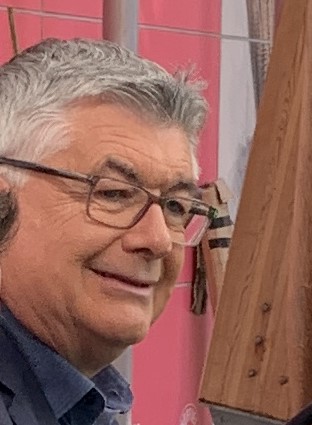 Wikimedia Commons, CC BY-SA
John Parrott at a Glance
- Nationality – English
- Born – 11 May 1964, Liverpool, England
- Turned Professional – 1983
- Career Ranking Titles – 9
- Career High Ranking – World No. 2
- World Championship – 1991 (defeated Jimmy White in the final)
- Honours – MBE, 1996
Early Life and Road to the Professional Game
Parrott grew up in Liverpool during the 1970s, the same era in which snooker was beginning its transformation from a smoky back-room pastime into a mainstream British television event. The BBC’s coverage of the World Snooker Championship at the Crucible Theatre in Sheffield captivated a generation, and Parrott was among those hooked early. He developed his game in local clubs, showing enough natural ability and competitive drive to turn professional in 1983 at the age of 18.
The professional circuit in the mid-1980s was dominated by Steve Davis, a fact that shaped every young player’s development during that period. Parrott learned quickly that talent alone was not going to be enough. He worked on his consistency, his positional play, and his ability to handle pressure in long-format matches, qualities that would eventually define his best years.
Career Highlights
Parrott reached the World Snooker Championship final for the first time in 1989, where he came up against Steve Davis. The result was brutal: Davis won 18-3, the heaviest final defeat in the tournament’s history at the Crucible. For many players, a loss that comprehensive could have defined and diminished them. Parrott used it as fuel.
Two years later, in 1991, he returned to the Crucible final and this time faced Jimmy White. Parrott won the title, completing what became the defining chapter of his career. The victory was not a fluke built on a single good week. It came in the context of the remarkable season that saw him complete a rare World and UK Championship double in the same year, a feat that underlined exactly how good he was at his peak. Winning both the sport’s most prestigious ranking event and its major invitational in a single campaign placed him firmly among the elite of his generation.
Over the full arc of his professional career, Parrott accumulated nine ranking titles and recorded more than 200 competitive century breaks. He spent significant time ranked inside the world’s top ten, and his career-high of number two confirmed that, during snooker’s most competitive era, he was the second-best player on the planet at his peak. The era he competed in included Steve Davis, Stephen Hendry, Jimmy White, and Ronnie O’Sullivan in his later years, which makes nine ranking titles a genuinely impressive total.
He was awarded an MBE in the Queen’s Birthday Honours list in 1996 for charitable services in Merseyside, recognition that acknowledged the community work he had undertaken throughout his career alongside his sporting achievements.
Playing Style and Technical Approach
Parrott was never a flamboyant player. He did not attempt to dazzle crowds with audacious shot-making or unconventional technique. His game was built on solidity: precise cue ball control, disciplined positional play, and the mental fortitude to grind through long-format matches without losing concentration or composure. Those qualities were exactly what the World Championship format, with its best-of-35-frames final, demanded.
His cue action was orthodox and clean, the kind that snooker coaches point to as a model of repeatability. Players who built careers on technique over instinct often produced their best snooker in the most demanding conditions, and Parrott was a clear example of that. The 1989 World final showed that he could be overwhelmed on a given day, but the 1991 triumph proved that when everything came together, his game was complete enough to beat anyone. Choosing the right snooker cue has always mattered to professional players, and Parrott was known throughout his career for the attention he paid to his equipment, something that would later inform his post-playing business ventures.
His safety play was among the better aspects of his game, reflecting an understanding of snooker as a chess match as much as a potting contest. He could be aggressive when the table allowed it, but he was equally comfortable making his opponent work for every opportunity. That balance made him one of the more complete players of the 1980s and 1990s.
Life After Playing
Parrott transitioned into broadcasting with a natural ease that many former players never find. He became a regular face on British television, most prominently as a presenter and team captain on A Question of Sport, which he was part of for a considerable stretch. His commentary work kept him connected to snooker, and his personality, self-deprecating and warm without being sycophantic, made him a popular figure well beyond the sport’s core audience.
In 2008, he launched John Parrott Cue Sports, an online retail business selling snooker and pool cues and snooker collectables. The business was rebranded as John Parrott Sports in 2019. It was a logical extension of his life in the game, and it gave him a commercial presence in the sport he had competed in at the highest level for over two decades. Fans who want to understand what professionals look for in their equipment can find useful context in resources covering the finer details of cue tips, since tip selection and maintenance is one of the most debated topics among serious snooker players.
His estimated net worth as of 2025 sits at around 9.1 million pounds, built across both his playing career earnings and his long television career. That figure places him comfortably within the group of snooker’s most financially successful former professionals, behind Davis, Hendry, and O’Sullivan but ahead of most of his contemporaries.
Legacy
John Parrott’s legacy in snooker is that of a player who maximised everything he had. He was not the most naturally gifted player of his era, and he would probably say so himself. But he competed consistently at the highest level for the better part of two decades, won the sport’s biggest title, completed a World and UK Championship double in the same season, and then built a second career in broadcasting that kept him relevant long after his playing days were done.
His story resonates particularly with fans who understand that elite sport is not only about raw talent. Mental resilience, the ability to absorb a catastrophic defeat and come back stronger, defined Parrott as much as any trophy. The 18-3 loss to Davis in 1989 and the World Championship win two years later are the two data points that best explain who he was as a competitor.
Liverpool produced a world snooker champion in John Parrott, and the city has always acknowledged him for it. He remains one of the most recognisable figures in the sport’s history, not just because of what he won, but because of how he carried himself throughout a career that asked a great deal of him and received a great deal in return.
Frequently Asked Questions
When did John Parrott win the World Snooker Championship?
Parrott won the World Snooker Championship in 1991, defeating Jimmy White in the final at the Crucible Theatre in Sheffield. It was the defining moment of his playing career, coming two years after he had suffered the heaviest final defeat in Crucible history against Steve Davis.
How many ranking titles did John Parrott win during his career?
Parrott won nine ranking titles across his professional career. That total placed him among the leading English players of his generation and included the 1991 World Championship.
What was John Parrott’s career-high world ranking?
Parrott reached a career-high world ranking of number two. Achieving that ranking during an era that included Steve Davis, Stephen Hendry, and Jimmy White makes it a significant measure of how consistently he competed at the very top of the sport.
What did John Parrott do after retiring from professional snooker?
Parrott built a long career in British television broadcasting, including an extended run as a presenter and team captain on A Question of Sport, and also worked as a snooker commentator. He launched a cue sports retail business in 2008, which was rebranded as John Parrott Sports in 2019.
Why was John Parrott awarded an MBE?
Parrott received his MBE in the 1996 Queen’s Birthday Honours list for charitable services in Merseyside. The honour recognised his community work in the Liverpool area rather than his achievements on the snooker table.