
Francisco Bustamante
Francisco Bustamante is one of the most celebrated pool players the Philippines has ever produced, and in a country that has given the world Efren Reyes, Django Agsin, and a roster of world-class cue artists, that is saying something significant. Born in Tarlac, Central Luzon on December 29, 1963,…
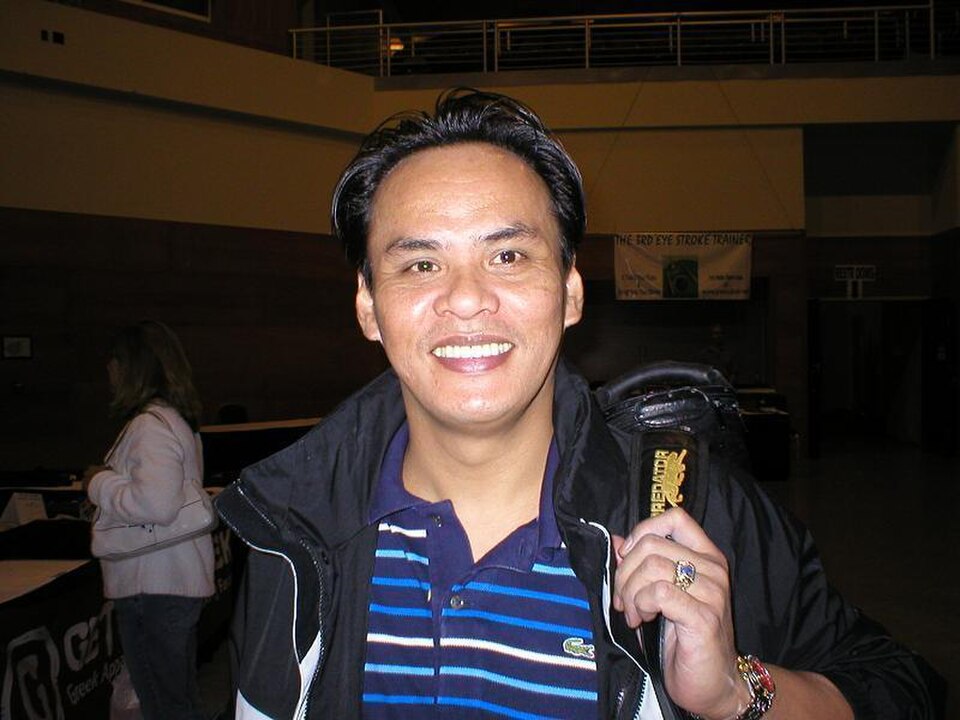 Wikimedia Commons, CC BY-SA
Francisco Bustamante at a Glance
- Nationality – Filipino
- Born – December 29, 1963, Tarlac, Philippines
- Nickname – Django
- Turned Professional – 1990s
- Major Titles – 2010 World Nine-Ball Championship, 1999 International Challenge of Champions, multiple WPA and tour titles
Early Life
Bustamante grew up in Tarlac with little in the way of financial comfort. His father made a living through modest means, and the family pool hall run by his sister became both a workplace and a classroom for the young Francisco. He racked balls, spotted tables, and then, after closing time, stayed behind to practice alone. The hours he logged in those quiet, empty halls built the mechanical precision that would later make him one of the most feared competitors on the international circuit.
He never finished high school. That fact is worth sitting with for a moment, because what he chose instead, total commitment to pocket billiards from around age ten onward, paid off in ways that defy easy summary. By fifteen he had already won his first local tournament in Tarlac. That early success was not a fluke. It signaled a level of ball-pocketing intuition that would carry him far beyond Central Luzon, eventually across all of Southeast Asia and then onto the world stage.
The teenage Bustamante soon began traveling around Luzon, playing anyone willing to put money on the table. That kind of road education, hustling local games, reading opponents, managing pressure, builds a different type of competitor than the one produced by structured academies. Bustamante learned to win in uncomfortable situations. That lesson never left him.
Career Highlights
Bustamante broke into professional competition during the 1990s and quickly established himself as a legitimate threat at the top level. His 1999 International Challenge of Champions victory was an early signal that he could compete and beat the best players in the world when the stakes were highest. He was not just a technically gifted player. He was a match player, someone who raised his level when the margin for error shrank.
The crown jewel of his career arrived in 2010 when Bustamante won the WPA World Nine-Ball Championship. The World Nine-Ball Championship is one of the most prestigious titles in the World Pool Championship circuit, and claiming it put Bustamante’s name permanently in the sport’s record books. Winning it required beating elite international competition across multiple sessions of nine-ball, a format that punishes errors immediately and rewards consistent shotmaking and tactical control.
Beyond that world title, Bustamante has accumulated a lengthy list of tour victories across WPA-sanctioned events and independent professional tours. He has been a regular presence at the US Open and other major American tour stops, consistently making deep runs and troubling top seeds. His longevity in the game, remaining competitive from the 1990s well into the 2010s and beyond, is one of the underappreciated aspects of his career.
His partnership with Efren Reyes in international team competition is another highlight. The two Filipinos, arguably the two best pool players their country has ever produced, represented the Philippines together in World Cup of Pool competition, combining their individual brilliance into one of the most formidable doubles pairings the sport has seen. Watching Reyes and Bustamante share a side of a table was, for pool fans, roughly equivalent to watching two Hall of Famers operate at their combined best.
Bustamante has also been a consistent competitor on the Mosconi Cup scene, where Europe and the United States go head to head. While his nationality places him outside the direct Mosconi Cup format, his influence on the players who have competed in that event, and on American pool culture broadly, has been undeniable. His appearances on various American pool tours have drawn attention from fans who follow the Mosconi Cup closely, as Bustamante’s style of play reflects the kind of aggressive, creative cue ball management that separates top-tier talent from everyone else.
The nickname Django deserves its own explanation. The moniker came to him in the Philippines during his mid-to-late twenties, drawn partly from the legacy of the famous fictional gunslinger and partly from a tendency he showed repeatedly in competition: coming from behind. Bustamante made a habit of appearing to be down and out, only to reel off a string of racks and take the match. Opponents who thought they had him beat learned, sometimes too late, that Django was never finished.
Playing Style
Bustamante plays nine-ball and eight-ball with a blend of aggression and patience that is not easy to manufacture. His shotmaking ability is exceptional, the product of thousands of solo hours on practice tables after closing time. But what separates him from merely talented players is his cue ball control. He moves the cue ball with purpose, leaving himself angles, managing the rack rather than simply reacting to it.
His break is powerful and consistent, generating enough scatter to routinely find early balls while keeping cue ball position manageable. Players who invest in quality equipment understand how much a well-balanced pool cue contributes to that kind of consistency at the break and through the rack. Bustamante’s game reflects decades of refinement in exactly that area, the ability to hit the ball hard with accuracy and recover the table when the rack does not fall perfectly.
He is also a superb reader of defensive situations. When the table is not running his way, Bustamante can play a safety game sophisticated enough to trouble world-class opponents. That two-way ability, attack when the table is open, defend when it is not, is the hallmark of a complete player. It is what kept him competitive against younger opponents as he moved through his forties and into his fifties.
His demeanor at the table is calm, sometimes almost distant. He does not celebrate wildly or betray emotion after bad rolls. That composure under pressure, forged through years of high-stakes competition in local halls and international arenas alike, is part of what makes him difficult to read and difficult to beat when he is running well.
Legacy and Impact
Francisco Bustamante’s place in pool history is secure. The 2010 World Nine-Ball Championship title is the headline, but the full resume, spanning multiple decades, numerous tour victories, world team competition alongside Efren Reyes, and consistent presence at the game’s highest levels, paints a picture of sustained excellence that few players anywhere in the world can match.
For Filipino pool specifically, Bustamante is one of the pillars. The Philippines has produced a remarkable concentration of elite pool talent, and Bustamante has both contributed to that tradition and benefited from the culture of serious billiards practice that runs deep in the country. His story, from racking balls in Tarlac to winning a world title, resonates with younger Filipino players in a direct and practical way. He did not come from money or structured coaching. He came from hours of practice and a willingness to compete under pressure.
His nickname will outlast any single result. Django. A player who comes from behind, who does not show his hand too early, who makes the shot when the match depends on it. That is the reputation Francisco Bustamante built over a lifetime in pool, and it is the one that will follow his name whenever the sport’s history is written.
Frequently Asked Questions
What is Francisco Bustamante’s nickname and where did it come from?
Bustamante is known as Django, a name he picked up in his mid-to-late twenties in the Philippines. It reflects his well-documented tendency to come from behind in matches, sets, and tournaments, mirroring the resilience of the fictional gunslinger character.
What is Francisco Bustamante’s most significant career title?
His biggest title is the 2010 WPA World Nine-Ball Championship, widely regarded as one of the premier titles in professional pool. It stands as the defining achievement of a career filled with major victories.
Where is Francisco Bustamante from?
Bustamante was born on December 29, 1963, in Tarlac, Central Luzon, Philippines. He grew up there and began his billiards career practicing in his sister’s pool hall after hours.
Did Francisco Bustamante ever compete alongside Efren Reyes?
Yes. Bustamante and Efren Reyes partnered to represent the Philippines in World Cup of Pool team competition, forming one of the most celebrated doubles pairings in the sport’s history.
How did Francisco Bustamante learn to play pool?
He taught himself largely through solo practice, working in his sister’s pool hall as a teenager, racking balls during business hours and practicing alone on the tables after the hall closed. He never completed high school, choosing to dedicate himself fully to billiards from around age ten.