
Dennis Taylor
Dennis Taylor is one of snooker’s most recognisable and beloved figures, a Northern Irish potter whose oversized spectacles became as iconic as his cue action. He turned professional in 1972 and built a career spanning nearly three decades, but it was a single frame, on a single night in April…
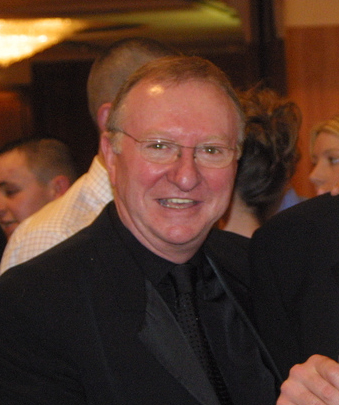 Wikimedia Commons, CC BY-SA
Dennis Taylor at a Glance
- Nationality – Northern Irish
- Born – 19 January 1949
- Turned Professional – 1972
- World Championship – 1985 (beat Steve Davis on the final black)
- Ranking Titles – 5
Early Life and Amateur Career
Dennis James Taylor was born on 19 January 1949 in Coalisland, County Tyrone, Northern Ireland. His father was a lorry driver and Taylor grew up one of seven children, a working-class upbringing that gave him no shortage of competitive edge. He picked up a cue for the first time at the age of nine, and within five years he was already the local champion in Coalisland, a remarkable rate of development for a kid in a small Irish town.
In 1966, aged 17, Taylor made a life-changing move to England, settling near Blackburn in Lancashire. The snooker scene there was a serious step up in competition, but Taylor thrived. He kept developing as an amateur, and in 1968 he won the British Junior Billiards Championship, the Under-19 national title that signalled he was ready for bigger things. That win was the springboard for his professional career, and he turned pro in 1972 at the age of 23.
Career Highlights
Taylor made his major tournament debut at the 1973 World Snooker Championship, losing 8 to 9 to Cliff Thorburn in what was then still held in Manchester. It was a tight, competitive exit against a future world champion, and it established early that Taylor was no journeyman. He would return to the Crucible in Sheffield many times over the following decades, becoming a consistent presence at the sport’s biggest stage.
His ranking event victories were two in total across his career, but the quality and context of those wins, particularly the first, meant his legacy far outweighs that number on paper. Taylor competed in an era dominated by Steve Davis, who hoovered up titles through the late 1970s and early 1980s with an efficiency that bordered on oppressive for every other player on tour. Beating Davis, when Davis was at his absolute peak, meant something.
The 1985 World Championship Final
No summary of Dennis Taylor’s career can skip past the night of 28 April 1985. Taylor faced Steve Davis in the final of the World Snooker Championship at the Crucible Theatre in Sheffield. Davis, the world number one and dominant force in the sport, was the heavy favourite. The match went the full 35 frames and came down to the final black ball. Taylor, needing it to win, potted it at 12:23 in the morning to win 18 to 17.
The broadcast audience peaked at 18.5 million viewers, a post-midnight BBC2 record that has never been beaten. The image of Taylor raising his cue above his head, those signature oversized glasses catching the Crucible lights, is permanently embedded in British sporting memory. It was not just a great snooker match. It was a cultural event. Taylor described the moment as the greatest of his life, and it is difficult to argue with him.
The glasses themselves deserve a mention. Taylor had switched to the distinctive large-framed spectacles because standard frames sat in his line of sight when he was down on the cue. The practical solution became the personal trademark, and no snooker fan from that generation could mistake him for anyone else.
Later Career and Senior Play
After the 1985 peak, Taylor remained a competitive force on the professional circuit through the late 1980s and into the 1990s. He retired from professional snooker in 2000 after a playing career of 28 years, a serious stint at the top level by any measure. His retirement from competitive play did not mean disappearing from the sport, however. Taylor moved into broadcasting and became a respected, warm, and frequently funny commentator for the BBC, a role he held for many years.
He also competed on the World Seniors circuit and was reportedly still playing in senior events as recently as 2021, aged 72, which says something about his enduring love for the game he picked up as a nine-year-old in Coalisland. Beyond snooker, Taylor has shown a willingness to stay in the public eye. He appeared on the third series of Strictly Come Dancing, finishing eighth alongside dance partner Izabela Hannah, which introduced him to an entirely new generation of fans who had never seen him at the Crucible.
Playing Style
Taylor was never a flashy potter in the mould of Jimmy White or Alex Higgins. His game was built on solidity, positional discipline, and nerve. He was a methodical, composed player who rarely gifted opponents easy chances. His safety game was underrated even at the time, and his ability to grind through long, attritional matches was a genuine weapon. That composure showed most clearly in the 1985 final, where he came from behind to win on the last ball without letting the occasion swallow him.
His technique was precise and economical. He addressed the ball cleanly, used a smooth, controlled delivery, and was particularly reliable on the colours under pressure. For players starting out today who want to understand what a technically sound cue action looks like, watching Taylor’s archive footage is still instructive. Equipment matters at that level, and Taylor was fastidious about his kit. Aspiring players looking to match his attention to detail might want to start by reading up on the best snooker cues available at different price points before committing to a setup.
His temperament was arguably his greatest asset. Taylor could lose a session heavily and come back the next day without any apparent psychological damage. That resilience, developed over years on the amateur circuit and then honed across nearly three decades as a professional, made him a dangerous opponent right to the end of his career.
Legacy
Ranking titles alone do not tell Taylor’s story. Two ranking event wins from a 28-year career might sound modest, but the nature of the era he played in, competing against Davis’s sustained dominance and then the wave of talent that followed, gives that record proper context. Taylor was a top-level professional throughout one of snooker’s most competitive periods.
His 1985 victory did something beyond winning him a trophy. It made snooker a household obsession in Britain. The overnight audience figures shocked broadcasters and sponsors alike and played a direct role in the commercial expansion of the sport through the late 1980s. Taylor did not just win a match. He helped build the game’s mainstream audience.
His commentary work kept him connected to the sport for the next two decades, and his personality, warm, self-deprecating, quick-witted, meant he remained popular with fans long after his last competitive frame. For anyone getting into snooker now, whether following the World Championship live or setting up a table at home, understanding the environment that produces quality play matters as much as the equipment. Those setting up a home table for the first time should spend time choosing the right snooker table before worrying about anything else.
Dennis Taylor is, simply put, one of the sport’s essential figures. The glasses, the grin, the raised cue at 12:23 in the morning. There is only one Dennis Taylor.
Frequently Asked Questions
When did Dennis Taylor win the World Snooker Championship?
Taylor won the World Snooker Championship in 1985, beating Steve Davis 18 to 17 on the final black ball in one of the most dramatic finishes in sporting history.
Where was Dennis Taylor born?
Taylor was born on 19 January 1949 in Coalisland, County Tyrone, Northern Ireland, and later moved to England in 1966, settling near Blackburn in Lancashire.
Why does Dennis Taylor wear such large glasses?
Taylor adopted the distinctive oversized spectacle frames because standard-sized frames sat directly in his line of sight when he was down on the cue. The practical fix became his defining visual trademark.
When did Dennis Taylor retire from professional snooker?
Taylor retired from professional snooker in 2000, after a career that spanned 28 years from his professional debut in 1972.
What did Dennis Taylor do after retiring from professional play?
Taylor became a snooker commentator for the BBC and remained a familiar voice in the sport’s broadcasts for many years. He also competed on the World Seniors circuit and appeared on Strictly Come Dancing, finishing eighth in the show’s third series.