
Buddy Hall
Buddy Hall is one of the most decorated and beloved figures in American pool history. Known across the billiards world as “The Rifleman” for his precise, methodical approach to the table, Hall built a career spanning several decades that placed him among the true legends of nine-ball and straight…
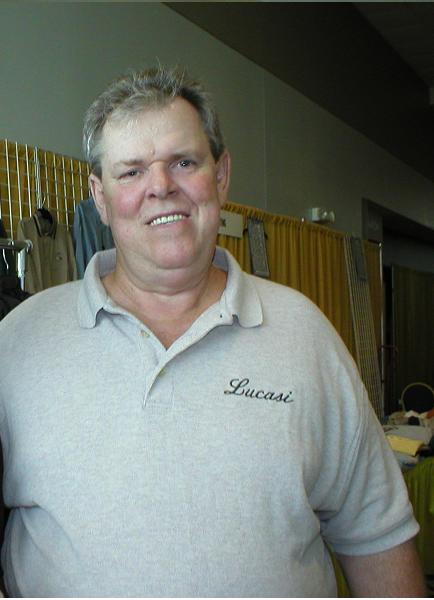 Wikimedia Commons, CC BY-SA
Buddy Hall at a Glance
Early Life and Road to the Table
Buddy Hall grew up in the American South, where pool halls were a genuine social institution and serious players could make a living on the road hustling action games. Like many of his generation, Hall came up through the grinding school of road pool, where survival meant sharp play, sharper instincts, and the ability to hold your nerve against strangers in unfamiliar rooms. There were no structured junior tours, no organized pathways. You learned by playing, and you played for money.
That background left a permanent mark on his game. Hall developed the kind of cue-ball control and positional discipline that only comes from years of high-stakes repetition. Players who came up through the road-pool era often had a toughness and adaptability that tournament grinders from later generations simply did not possess, and Hall embodied that quality more than almost anyone.
By the time organized professional pool began to take clearer shape in the United States, Hall was already a seasoned player with a reputation that preceded him. His nickname, “The Rifleman,” captured something essential about his game: the sense that every shot was measured, aimed, and delivered with an almost mechanical precision.
Career Highlights
Hall’s career achievements are substantial by any measure. He is a multiple-time champion at the US Open Pool Championship, one of the sport’s most prestigious nine-ball events, and that alone would secure a prominent place in pool’s history books. His wins at the US Open came across different eras of the tournament, which speaks to his ability to compete and win at the highest level over an extended period rather than enjoying a single peak and fading.
Beyond the US Open, Hall accumulated wins on the professional tour circuits that operated in the United States from the 1970s onward. He was a consistent presence at the sport’s major events, regularly reaching late stages of tournaments when many contemporaries had already retired. His longevity in competitive pool is genuinely remarkable, and it was built on technical fundamentals rather than athleticism, meaning age did not erode his game the way it erodes other sports.
Hall also made his mark at the World Pool Championship, competing on the international stage and representing American pool at its best. His appearances at world-level events helped cement his standing not just as a domestic champion but as a globally recognized name in the sport.
One of the threads running through Hall’s career was his involvement in the Mosconi Cup era. As one of the respected senior voices in American pool, his influence on the culture of US versus Europe competition, even in an advisory and ambassadorial sense, was felt across generations of players who came after him.
Hall was inducted into the Billiard Congress of America Hall of Fame, the sport’s most significant recognition in the United States. That induction was a formal acknowledgment of what pool insiders had known for years: that Buddy Hall was a foundational figure in the modern history of American pocket billiards.
Playing Style and Technical Approach
The “Rifleman” nickname is not just colorful branding. It reflects something specific about how Hall approaches the game. Where some players rely on flair or shot-making improvisation, Hall built his game on a foundation of positional play, cue-ball management, and pattern recognition. He thinks several shots ahead and constructs his runs with a methodical logic that leaves very little to chance.
His stroke is smooth and repeatable. Hall belongs to a school of American players who prize consistency over flash, and his technique reflects that philosophy. The cue moves through the ball cleanly and the follow-through is controlled, producing a reliable contact that does not vary much shot to shot. This kind of stroke is built over years rather than months, and it is one reason Hall remained competitive into an age when most professionals have long since moved on.
Defensively, Hall is smart and patient. He does not force shots that are not there, and he is comfortable playing a safety when the situation calls for it rather than gambling on a low-percentage pot. That mental discipline, knowing when not to shoot, is a quality that separates good players from great ones, and it was central to Hall’s approach throughout his career.
His equipment choices reflect the same traditionalist sensibility. Hall represents the era of American players who developed their games before the market for specialist cues became crowded, and his commitment to a consistent setup is part of the same philosophy that produced his consistent stroke. Players who want to understand what a quality pool cue looks and feels like in experienced hands could do worse than studying how Hall approaches his equipment and his pre-shot routine.
Hall also belongs to the tradition of players who take practice seriously as a discipline in itself. The road-pool background meant that practice was always purposeful rather than recreational. You practiced to win, because losing cost you money and reputation. That mindset never left him.
Legacy and Influence
Buddy Hall’s influence on American pool extends well beyond his own titles. He is one of a small group of players who bridged the rough-and-tumble road-pool era of mid-century America and the more structured professional circuit that emerged in the latter decades of the twentieth century. Having credibility on both sides of that divide gives him a unique standing in the sport.
Younger players who came up watching Hall compete absorbed lessons about longevity, discipline, and the importance of fundamentals. In an era when pool has at times become associated with power breaks and high-risk shot-making, Hall’s career is a counter-argument, a demonstration that precision and patience can sustain a player across decades of top-level competition.
His presence at major events, often competing against players a generation or two younger, was genuinely inspiring to pool fans and helped demonstrate that the sport rewards accumulated skill and knowledge in a way that few athletic pursuits can match. Pool at its highest level is partly a physical game and partly a mental one, and Hall’s ability to compete deep into his later years is evidence of which dimension matters more over the long run.
Within the United States, Hall remains one of the sport’s most recognizable names among serious players. His reputation crosses regional lines, which is notable in a sport where reputations often grow locally before spreading. The Rifleman was known everywhere the game was played seriously, from the pool rooms of the South to the tournament halls of the Northeast and Midwest.
The BCA Hall of Fame induction placed him in permanent company with the other architects of American pool’s modern history. It was recognition that his contributions, both as a competitor and as a representative of the sport’s culture and values, earned a permanent place in the record.
Frequently Asked Questions
Why is Buddy Hall called “The Rifleman”?
The nickname reflects his precise, measured approach to shot-making, the sense that each shot is carefully aimed and executed with the consistency of a marksman. It became one of the most recognized monikers in American pool history.
What are Buddy Hall’s most significant tournament victories?
Hall is a multiple-time champion at the US Open Pool Championship, widely regarded as one of the most prestigious nine-ball events in the world, along with other professional tour victories accumulated over several decades of competition.
Is Buddy Hall in the Hall of Fame?
Yes. Hall was inducted into the Billiard Congress of America Hall of Fame, the sport’s most recognized honor in the United States, in acknowledgment of his career-long contributions to American pocket billiards.
What disciplines did Buddy Hall compete in?
Hall competed primarily in nine-ball and straight pool, the two disciplines that dominated American professional pool during the bulk of his competitive career. His skills translated across both formats because of his fundamentally sound technique and cue-ball control.
What made Buddy Hall stand out from other players of his era?
Beyond his technical precision, Hall’s longevity set him apart. He competed seriously against top professionals well beyond the age when most players decline, which speaks to the strength of his fundamentals, his mental approach, and the depth of his experience accumulated through the road-pool era of American billiards.