
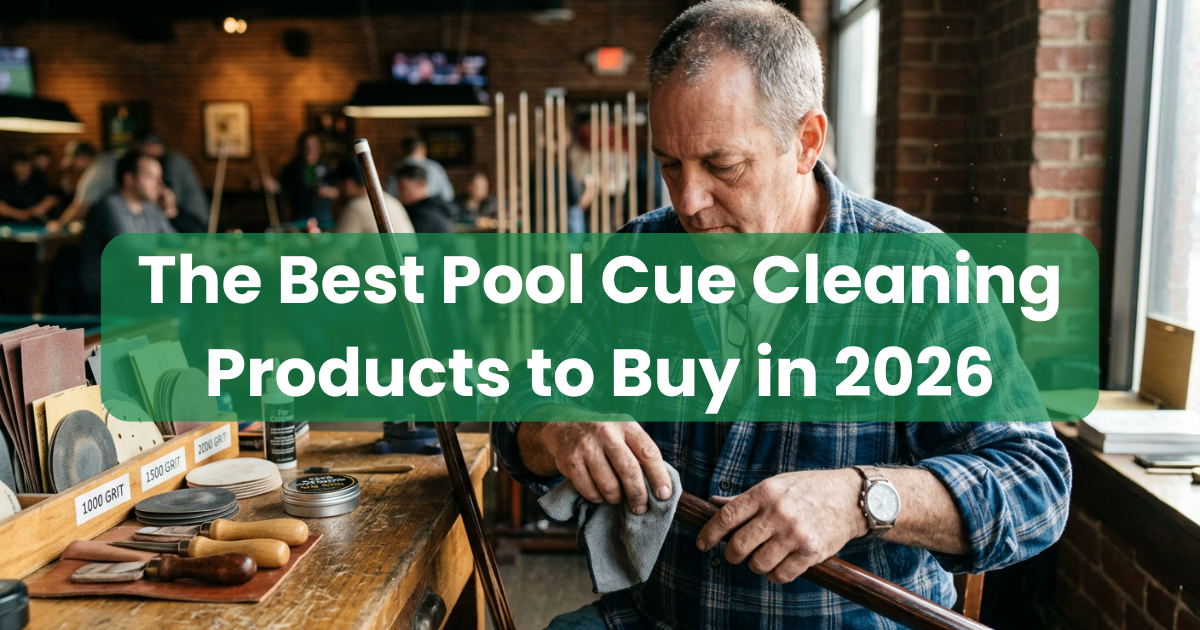
The Best Cue Cleaning Products to Buy in 2026
Proper cue maintenance extends the life of your equipment and maintains consistent performance on every shot. Quality cleaning products remove dirt, oils, and residue that can affect your grip and stroke smoothness. Regular cleaning with the right products keeps your cue looking professional and performing at its peak.
Best Overall Cue Towel: POWERGLIDE Microfibre Cue Towel (49 x 25cm)
A simple microfibre towel is the most important cue maintenance tool you can own.
The POWERGLIDE Microfibre Cue Towel is made from 100% polyester with a terry weave for high absorbency. It removes:
- Chalk dust
- Hand grease
- Sweat
- Light grime
Size: 49 x 25cm
Material: Microfibre polyester
Weight: 40g
Pros
- Excellent value
- Quick-drying
- Large enough to fold and grip shaft properly
- Suitable for all cue types
Cons
- Basic design
- Not abrasive (won’t remove heavy buildup)
Best Budget Shaft Burnisher: Straightline Snooker Performance Cleaner
This lightweight abrasive pad is designed to clean and lightly burnish cue shafts.
It measures 90mm x 50mm and works by sliding up and down the shaft to remove chalk residue and surface dirt.
Size: 90mm x 50mm
Type: Light abrasive pad
Use: Shaft cleaning & burnishing
Pros
- Very affordable
- Compact and portable
- Removes chalk buildup
Cons
- Light abrasive — avoid overuse
- No protective sleeve
Best Cue Conditioning Oil: Ronyme Billiard Cue Care Wax (120ml)
If your cue shaft feels dry or slightly rough, a conditioning oil can restore smoothness and shine.
The Ronyme Cue Care Wax includes:
- 120ml conditioning oil
- Application towel
Designed to:
- Rehydrate wood
- Reduce surface cracking
- Improve smoothness
Size: 120ml
Includes: Towel
Use: Shaft conditioning
Pros
- Budget-friendly
- Includes towel
- Good for dry climates
Cons
- Not a substitute for proper sanding or repair
- Use sparingly to avoid over-oiling
Best All-in-One Tip Maintenance Kit: TaiBA 11-in-1 Cue Tip Repair Kit
This 11-in-1 cue tip tool combines shaping, scuffing, trimming and maintenance functions into one compact device.
It features:
- Stainless steel blades
- ABS housing
- Tip shaping tools
- Tip scuffers
- Trimming functionality
Weight: 1.6oz
Construction: 304 stainless steel + ABS
Pros
- Multi-function
- Saves money vs buying separate tools
- Portable
- Good for home repairs
Cons
- Not workshop-grade
- Beginners should use carefully when trimming
Alternative Cleaning Cloth: BESPORTBLE Coral Fleece Cue Cloth (28.5cm)
This coral fleece cloth is smaller than the Powerglide option and focuses on shaft polishing.
Size: 28.5cm square
Material: Coral fleece
Weight: 43g
Pros
- Soft material
- Lightweight
- Easy to carry
Cons
- Smaller surface area
- Limited review base
- Not as durable as premium towels
Frequently Asked Questions
1. How often should I clean my cue shaft?
Clean your cue shaft after every playing session to remove oils, chalk residue, and dirt that accumulate during play. Daily cleaning prevents buildup that becomes harder to remove over time and maintains optimal grip and smoothness. For casual players, weekly cleaning may suffice, but serious players should wipe down shafts between games. Pay attention to your shaft’s feel – when it becomes sticky, rough, or discolored, it needs immediate attention. Regular cleaning also helps you spot potential problems like small cracks or worn areas before they become serious issues. Consistent maintenance keeps your cue performing at its best and extends its lifespan significantly.
2. What’s the best way to clean a wooden cue shaft?
Start with a slightly damp cloth to remove surface dirt and chalk, wiping along the grain direction. For deeper cleaning, use fine steel wool (#0000 grade) with light, circular motions to remove stubborn residue without damaging the wood. Follow up with a clean, dry cloth to remove any particles. Some players use specialized shaft cleaners or conditioners designed for cue maintenance. Avoid harsh chemicals, excessive moisture, or aggressive scrubbing that could damage the wood finish. Work in small sections and always finish with a smooth burnishing motion using leather or a clean cloth. The shaft should feel smooth and clean without any sticky spots or residue.
3. Can I use household cleaners on my cue?
Avoid most household cleaners as they contain chemicals that can damage wood finishes, joint threads, or wrap materials. Products with ammonia, bleach, or strong solvents can strip protective coatings, discolor wood, or weaken adhesives. Dish soap diluted in water works for basic cleaning but use sparingly and dry thoroughly. Glass cleaners may work on some synthetic materials but test in an inconspicuous area first. Alcohol-based products can dry out wood and damage certain finishes. Stick to products specifically designed for cue maintenance or simple solutions like damp cloths and fine steel wool. When in doubt, consult your cue manufacturer’s recommendations or a qualified cue repair professional.
4. How do I clean leather wraps without damaging them?
Clean leather wraps gently using a barely damp cloth with mild soap, working in small circular motions. Remove soap residue immediately with a clean, damp cloth and dry thoroughly. Avoid soaking the leather or using excessive moisture that could cause staining, stiffness, or separation from the butt. For stubborn stains, use leather-specific cleaners designed for fine goods. After cleaning, apply leather conditioner sparingly to maintain flexibility and prevent cracking. Some players prefer dry cleaning methods using fine brushes or specialized leather cleaners. Test any product in a hidden area first. Regular gentle maintenance prevents the need for aggressive cleaning that could damage the leather permanently.
5. What tools do I need for proper cue cleaning?
Essential cleaning tools include fine steel wool (#0000 grade), lint-free cloths, and a leather burnisher or shaft slicker. Many players also keep cue-specific cleaning solutions, leather conditioner, and small brushes for detailed work. A soft-bristled toothbrush helps clean intricate inlays or joint areas. Microfiber cloths work well for final polishing without leaving residue. Some prefer specialized shaft cleaners and conditioners designed specifically for cue woods. Avoid paper towels that can scratch, rough cloths that leave fibers, or steel wool coarser than #0000. Keep cleaning supplies organized in a small kit for easy access. Quality tools last longer and provide better results than makeshift alternatives.
6. How do I remove stubborn chalk buildup from my shaft?
For heavy chalk buildup, start with fine steel wool (#0000) using light pressure in circular motions. Work gradually, checking progress frequently to avoid over-cleaning. Follow with a damp cloth to remove particles, then dry thoroughly. Shaft slickers or leather burnishers can help smooth the surface after cleaning. Some players use specialized shaft cleaners designed to dissolve chalk residue without damaging wood. For extremely stubborn buildup, consider professional cleaning or refinishing services. Prevention is key – regular cleaning prevents heavy accumulation that requires aggressive removal. Never use coarse abrasives, steel wool rougher than #0000, or harsh chemicals that could permanently damage your shaft’s finish or playing characteristics.
7. Should I use cue wax or oil on my shaft?
Most modern cue shafts perform best without additional wax or oil, which can actually attract dirt and create sticky surfaces. Traditional practice favored light oiling, but contemporary shaft finishes are designed to function optimally without additives. Some players apply very thin coats of specialized shaft conditioners, but less is more. Excessive products can penetrate the wood, affecting its natural moisture balance and potentially causing warping or joint problems. If your shaft feels dry or rough, gentle cleaning often resolves the issue better than adding products. Consult your cue manufacturer’s recommendations, as different finishes have varying maintenance requirements. When in doubt, maintain the shaft’s natural feel through regular cleaning alone.
8. How do I clean the joint areas of my cue?
Clean joint threads carefully using a soft brush or cotton swab to remove chalk dust and debris that can affect connection quality. Avoid using liquids that could penetrate the joint mechanism or damage internal components. For metal joints, dry brushing usually suffices, while wood-to-wood joints need gentler care. Check for damage, wear, or looseness during cleaning. Some players use compressed air to blow out particles, but ensure the joint is properly secured first. Never force threaded joints or over-tighten during reassembly. Joint maintenance prevents wear that could affect your cue’s performance or require expensive repairs. Clean joints also ensure smooth assembly and disassembly for transportation.
9. Can cleaning products damage my cue’s value or warranty?
Improper cleaning can definitely damage your cue’s finish, affecting both performance and resale value. Harsh chemicals, excessive moisture, or aggressive cleaning methods can void warranties and cause irreversible damage. Always check manufacturer guidelines before using any cleaning products, especially on expensive or custom cues. Document your maintenance routine in case warranty issues arise. Some manufacturers specify approved cleaning methods and products. Using unauthorized chemicals or techniques often voids coverage for damage claims. When uncertain, consult the manufacturer or a qualified repair professional rather than risk expensive mistakes. Gentle, appropriate cleaning maintains value, while improper maintenance can destroy it. Conservative approaches protect both performance and investment.
10. What’s the difference between cleaning and refinishing a cue?
Cleaning removes surface dirt, oils, and residue while preserving the existing finish, requiring only gentle products and techniques. Refinishing involves removing or repairing the actual finish layer, often requiring professional services and specialized equipment. Signs your cue needs refinishing include deep scratches, worn finish that can’t be cleaned, persistent rough spots, or damaged areas that affect play. Cleaning handles routine maintenance, while refinishing addresses structural or aesthetic damage. Attempt cleaning solutions first, as many perceived finish problems are actually surface contamination. Refinishing can affect a cue’s value, especially on vintage or collectible pieces, so proceed carefully. Professional assessment helps determine whether cleaning or refinishing is appropriate for your specific situation.