
Terry Griffiths
Terry Griffiths did something in 1979 that no player had done before and that the sport has rarely seen since: he walked into the World Snooker Championship as a qualifier and walked out as champion, on his very first attempt. A former postman from Llanelli, Wales, Griffiths turned professional at…
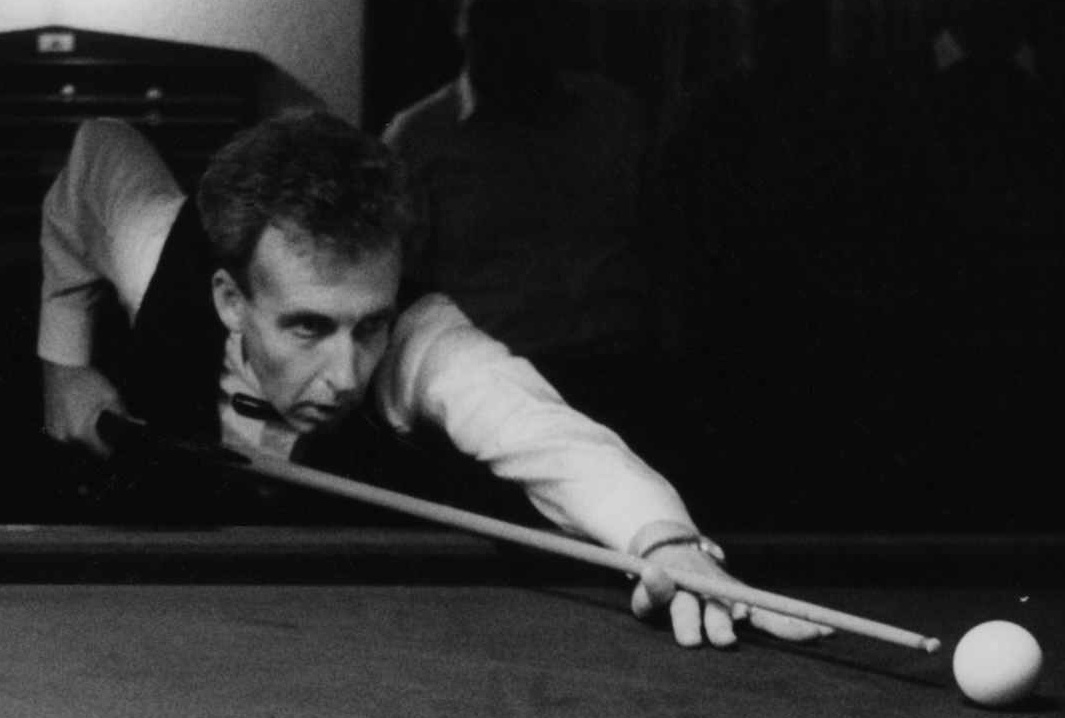 Wikimedia Commons, CC BY-SA
Terry Griffiths at a Glance
- Nationality – Welsh
- Born – 16 October 1947
- Died – 1 December 2024
- Turned Professional – 1978
- Career Active – 1978 to 1997
- Triple Crown Titles – World Championship (1979), Masters (1980), UK Championship (1982)
Early Life and Amateur Career
Griffiths was born in Llanelli on 16 October 1947 and grew up in a working-class household where snooker was a pub-and-club pastime rather than a professional ambition. He spent years working as a postman and later as an insurance agent while honing his game in local billiard halls. That grind paid off in serious fashion: Griffiths became a Welsh amateur champion and, more impressively, a two-time English amateur champion, a remarkable achievement for a player representing Wales in a competition dominated by English clubs and players.
Those amateur titles confirmed what anyone who watched him already knew: Griffiths had the temperament and the technique for the highest level. He turned professional in 1978 at the age of 31, later than almost any other player who would go on to achieve what he achieved. The snooker world took little notice at first. It would not make that mistake twice.
Career Highlights
The 1979 World Championship
The Crucible Theatre in Sheffield has witnessed plenty of shocks over the decades, but nothing quite like what Terry Griffiths produced in 1979. Coming through the qualifying rounds as a first-year professional, he progressed through the draw match by match, defeat never really looking likely even when it would have been entirely forgivable. In the final, he faced Ray Reardon, a six-time world champion and the dominant figure of 1970s snooker. Griffiths beat him 24 to 16. It was not a fluke, not a squeaker, not a case of a champion having an off-week. It was a commanding performance from a man who had never been to the Crucible before as a competitor.
The moment Griffiths announced his victory to the television cameras, uttering “I’m in the final now, you know” during an earlier round in a tone of quiet disbelief, became one of snooker’s most enduring moments. It captured something genuine about the man: honest, unaffected, and slightly stunned by his own excellence.
Completing the Triple Crown
Griffiths did not allow the world title to be a one-off peak. He won the Masters in 1980, adding the sport’s most prestigious invitational event to his collection, and then took the UK Championship in 1982. That third title made him one of a select group of players to have completed snooker’s Triple Crown, winning the World Championship, the Masters, and the UK Championship at least once. As of 2026, only eleven players in history have managed it.
He also reached the World Championship final again in 1988, confirming that his 1979 triumph was not simply a lightning strike. The 1979 to 1988 span across two final appearances at the Crucible shows a player who was consistently competitive at the very top of the game across nearly a decade of professional snooker. He also reached the final of the 1989 European Open, losing the deciding frame to John Parrott, a result that underlined how tight the margins were even at the end of his peak years.
Wales and the World Cup
Individual honours tell only part of the Griffiths story. He was a key figure in the Welsh national team and helped Wales win the World Cup twice. Playing alongside teammates including Mark Williams and others across his international career, Griffiths brought the same calm authority to team competition that he showed on the individual circuit. For a small nation punching well above its weight in snooker, Griffiths was often the player opponents least wanted to face.
Rankings and Longevity
Griffiths maintained a presence in the upper reaches of the world rankings for the bulk of his professional career. While precise ranking numbers from the early 1980s are harder to pin down than modern era statistics, his consistent run of deep tournament finishes across the 1979 to early 1990s period placed him firmly in the elite tier of the sport. He competed professionally until 1997, a span of nearly two decades from his late-starting debut.
Playing Style
Griffiths was a methodical, safety-first technician who believed in precision over flash. His long potting was reliable rather than spectacular, but his positional play and his understanding of the table geometry were genuinely exceptional. He built breaks carefully, never gambling on a low-percentage shot when a well-constructed safety exchange could manufacture a better opportunity. Critics who wanted entertainment sometimes found his approach grinding, but opponents found it suffocating.
His cue action was smooth and repeatable, the product of thousands of hours in amateur halls before he ever turned professional. Players who use top-quality equipment tend to shoot more consistently, and serious amateurs looking to replicate that kind of smooth delivery should pay close attention to their choice of snooker cues, since the weight, taper, and tip all affect how reliably a player can reproduce the same stroke under pressure.
Griffiths was also famously deliberate at the table. He took his time, measured every shot, and never appeared hurried. In an era when Steve Davis was setting the standard for clinical efficiency, Griffiths operated from a similar philosophy: control the table, minimize errors, and make the opponent play difficult snookers rather than gift them long-range opportunities.
Coaching Career and Legacy
After retiring from competitive play in 1997, Griffiths moved into coaching and quickly established himself as one of the sport’s most capable mentors. He had begun working with young players as early as 1987, and in 1996 he became director of coaching for the World Professional Billiards and Snooker Association (WPBSA), formalizing an involvement that had been growing informally for years. Through that role, he shaped the development of multiple generations of professional players, passing on the positional discipline and safety awareness that had defined his own game.
His influence on the sport as a coach arguably extended his impact beyond what his playing career alone could have achieved. Several players who went on to win major titles credited Griffiths with helping them understand the mental and tactical demands of professional snooker at its highest level.
Griffiths died on 1 December 2024. Tributes from across the snooker world reflected the genuine affection and respect the game had for him, not just as a champion but as someone who gave back consistently over decades. He was inducted into the Welsh Sports Hall of Fame, a recognition that placed him among the defining sporting figures his nation produced in the twentieth century.
The 1979 World Championship remains his defining moment, but reducing Terry Griffiths to that single achievement would be doing him a disservice. He was a Triple Crown winner, a two-time World Cup champion with Wales, a nearly two-decade professional competitor, and a coach who helped shape the modern game. That is a career of genuine substance, not a single lucky night in Sheffield.
Frequently Asked Questions
When did Terry Griffiths win the World Snooker Championship?
Griffiths won the World Snooker Championship in 1979, defeating Ray Reardon 24 to 16 in the final. It was his debut appearance at the Crucible, making the achievement one of the most extraordinary in the tournament’s history.
Did Terry Griffiths complete snooker’s Triple Crown?
Yes. Griffiths won the World Championship in 1979, the Masters in 1980, and the UK Championship in 1982, making him one of eleven players in history to have completed the Triple Crown as of 2026.
When did Terry Griffiths turn professional?
Griffiths turned professional in 1978 at the age of 31, considerably later than most players who reached his level of achievement. He had previously won Welsh and English amateur titles before making the step up.
What did Terry Griffiths do after retiring from competitive snooker?
Griffiths moved into coaching after retiring in 1997, having begun mentoring young players as early as 1987. He served as director of coaching for the WPBSA from 1996 and became one of the sport’s most respected development figures.
When did Terry Griffiths die?
Terry Griffiths died on 1 December 2024. He was 77 years old, and tributes from across the snooker community reflected the enormous respect the sport had for him as both a player and a coach.