
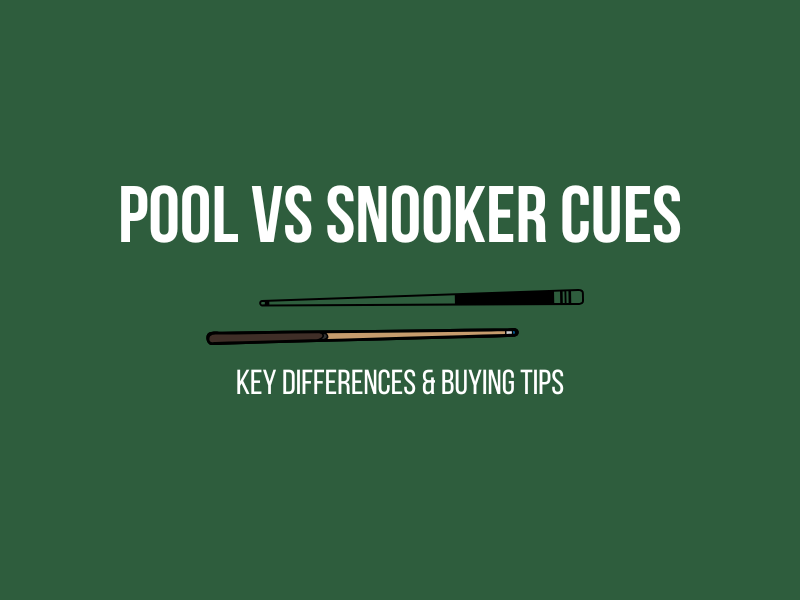
Pool vs Snooker Cues: Key Differences & Buying Tips
The cue you choose fundamentally shapes your experience in any cue sport, yet many players underestimate how dramatically pool and snooker cues differ in design, specification, and performance characteristics. While both may look similar to the untrained eye, these differences aren’t merely cosmetic, they reflect the distinct technical demands, playing styles, and shot requirements of each game.
Whether you’re a newcomer trying to understand which cue sport to pursue, an existing player considering crossover play, or someone setting up a multi-game table at home, understanding these differences is crucial for making informed equipment decisions. Using the wrong cue type can hinder technique development, limit shot accuracy, and ultimately reduce your enjoyment of these rewarding games.
Cue Anatomy: What Makes a Cue a Cue?
Essential Components
Understanding basic cue construction helps explain why different cue sports require different specifications and design approaches.
Primary Structural Elements:
Butt Section:
- Handle area: Where the player grips the cue
- Weight distribution: Often contains weight bolts or cores for balance
- Wrap or finish: Leather, linen, or bare wood for grip preference
- Joint connection: Attaches to shaft for two-piece cues
Shaft:
- Playing surface: Primary contact area with bridge hand
- Taper design: Gradual thickness change from joint to tip
- Wood selection: Affects stiffness, vibration, and feel
- Length proportion: Typically 75-80% of total cue length
Tip Assembly:
- Playing tip: Leather contact surface for ball striking
- Ferrule: Protective collar between tip and shaft
- Tip diameter: Critical specification varying between cue sports
- Tip hardness: Affects shot control and spin generation
Joint System (Two-Piece Cues):
- Connection method: How butt and shaft attach
- Material: Brass, steel, or synthetic options
- Thread type: Quick-release or traditional screw connections
- Impact on feel: Affects vibration transmission and shot feedback
Construction Impact on Performance
Different cue sports emphasize different playing characteristics, leading to distinct design priorities:
Precision-Focused Design (Snooker):
- Thinner shafts for delicate touch
- Smaller tips for accurate cue ball control
- Lighter overall weight for extended play sessions
- Forward balance for positioning accuracy
Power-Focused Design (Pool):
- Thicker shafts for power transfer
- Larger tips for break shots and English application
- Heavier weight for momentum and stability
- Rearward balance for break and power shots
Pool Cues vs. Snooker Cues: Key Physical Differences
Length and Weight
Length Specifications:
Pool Cues:
- Standard length: 57-59 inches (145-150cm)
- Tournament regulation: 58 inches most common
- Variance tolerance: ±1 inch for player preference
- Youth/specialty sizes: 48-52 inches available
Snooker Cues:
- Standard length: 57-58 inches (145-147cm)
- WPBSA maximum: 60 inches allowed but rarely used
- Professional preference: 57.5-58 inches most popular
- Table compatibility: Optimized for full-size 12ft tables
Weight Characteristics:
| Cue Type | Weight Range | Typical Weight | Design Purpose |
| Pool | 18-21 oz | 19-20 oz | Power and break shots |
| Snooker | 17-19 oz | 17.5-18.5 oz | Control and precision |
| Difference | +1-2 oz heavier | +1 oz average | Power vs. finesse emphasis |
Weight Distribution Impact:
- Pool: Rear-weighted for power generation and break shots
- Snooker: Forward-weighted for precise positioning and control
- Balance point: Pool cues typically balance 1-2 inches further back
Shaft and Taper
Shaft Thickness and Design:
Snooker Shafts:
- Diameter at joint: 11-12mm (0.43-0.47 inches)
- Taper style: Very gradual, gentle reduction
- Tip end diameter: Minimal reduction from joint to ferrule
- Flexibility: Slightly more flexible for touch shots
Pool Shafts:
- Diameter at joint: 12.5-13.5mm (0.49-0.53 inches)
- Taper styles: Pro taper (minimal) or progressive taper (more dramatic)
- Tip end diameter: Greater reduction from joint to tip
- Stiffness: Stiffer construction for power transfer
Taper Impact on Play:
- Gentle taper (snooker): Consistent feel throughout shaft length, better for bridge stability
- Progressive taper (pool): More dramatic thickness change, preferred for varied bridge positions
- Pro taper (pool): Minimal change similar to snooker, gaining popularity among precision players
Tip Size and Hardness
Tip Diameter Specifications:
Snooker Tips:
- Standard diameter: 9-10mm (0.35-0.39 inches)
- Professional preference: 9.5mm most common
- Precision benefit: Smaller contact area for accurate cue ball control
- Chalk retention: Requires more frequent chalking due to size
Pool Tips:
- Standard diameter: 12-13mm (0.47-0.51 inches)
- Break cue tips: Often 13-14mm for maximum power transfer
- Playing advantages: Larger contact area reduces miscue risk
- Chalk coverage: Better chalk retention for multiple shots
Hardness and Material Differences:
| Aspect | Snooker Tips | Pool Tips |
| Hardness | Medium to medium-soft | Medium to hard |
| Material | Layered elk/pig hide | Layered cowhide/synthetic |
| Shape | Rounded dome | Flatter dome to nickel radius |
| Replacement frequency | Every 6-12 months | Every 8-18 months |
| Cost | £15-30 professionally fitted | £10-25 professionally fitted |
Performance Impact:
- Smaller snooker tips: Better for spin control, side English, precise positioning
- Larger pool tips: Better for power shots, break shots, reduced miscuing
- Hardness differences: Snooker’s softer tips provide better chalk grip and touch feel
Materials and Finish
Wood Selection and Characteristics:
Ash (Traditional Choice):
- Appearance: Light color with distinctive grain patterns
- Properties: Good stiffness-to-weight ratio, traditional snooker favorite
- Advantages: Natural look, proven performance record
- Disadvantages: Can be slightly more porous, requires maintenance
Maple (Modern Alternative):
- Appearance: Lighter color, tighter grain pattern
- Properties: Harder wood, excellent power transfer
- Advantages: Smoother surface, less maintenance required
- Disadvantages: Can feel “harder” to some players
Advanced Materials:
- Composite shafts: Carbon fiber or fiberglass reinforcement
- Laminated construction: Multiple wood layers for stability
- Synthetic options: Fully artificial materials for consistency
Joint Construction Differences:
Snooker Joints:
- ¾ joint position: Splits 18 inches from butt end
- Traditional threads: Fine threading for secure connection
- Brass ferrules: Traditional material choice
- Minimal joint impact: Designed to preserve one-piece feel
Pool Joints:
- ½ joint common: Center splits for portability
- Quick-release options: Faster assembly/disassembly
- Steel pin systems: Some high-end cues use steel pins
- Variable position: Joint placement varies by manufacturer
Can You Use a Pool Cue for Snooker (and Vice Versa)?
Practical Compatibility Issues
Using Pool Cues for Snooker:
Major Performance Limitations:
- Tip size mismatch: 12-13mm pool tips vs. 9-10mm snooker requirement
- Accuracy problems: Larger tips make precise positioning more difficult
- Weight issues: Heavier pool cues affect delicate touch shots
- Balance problems: Rear-weighted design doesn’t suit snooker’s precision needs
Specific Playing Impacts:
- Cue ball control: Larger tips provide less precise English (side spin)
- Safety shots: Difficult to achieve the subtle positioning snooker demands
- Long potting: Heavier weight can affect accuracy on distance shots
- Frame length: Pool cue weight becomes tiring during long snooker matches
Using Snooker Cues for Pool:
Performance Challenges:
- Break shots: Lighter weight and smaller tip reduce break power
- Power play: Insufficient mass for optimal power transfer
- Miscue risk: Smaller tips more prone to slipping on aggressive shots
- Spin application: Less surface area for heavy English application
Specific Game Impacts:
- 8-ball play: Reduced breaking power affects opening strategy
- 9-ball: Lighter cue limits aggressive shot-making options
- Bank shots: Less power availability for distance bank shots
- Jump shots: Reduced weight makes jump shots more difficult
Real-World Scenarios and Solutions
Multi-Game Home Tables:
Compromise Approaches:
- Choose primary game: Select cue for most frequently played game
- Mid-specification cue: Find cues with moderate specifications
- Multiple cues: Different cues for different games (space permitting)
- Adjustable systems: Some cues offer changeable weight/tip systems
Occasional Crossover Play:
Short-Term Solutions:
- Club cues: Use venue-provided appropriate cues when visiting
- Borrowing: Use friends’ properly specified cues for occasional play
- Rental options: Some venues rent appropriate cues
- Basic compatibility: Low-level casual play may tolerate mismatched cues
Compatibility Assessment
| Scenario | Pool Cue for Snooker | Snooker Cue for Pool |
| Casual play | Possible but limiting | Workable for some games |
| Skill development | Not recommended | Significantly limiting |
| Competitive play | Unsuitable | Unsuitable |
| Learning technique | Counterproductive | May hinder power development |
| Long sessions | Tiring and inaccurate | Frustrating lack of power |
Bottom Line Recommendation: While temporary crossover use is possible for very casual play, serious improvement in either game requires sport-specific cues. The specification differences exist for fundamental performance reasons that cannot be easily compromised.
Buying Tips: How to Choose the Right Cue for Your Game
Assess Your Needs
Primary Game Determination:
If Snooker is Your Focus:
- Prioritize: 17-18.5 oz weight, 9-10mm tip, forward balance
- Consider: ¾ joint for tournament portability
- Budget for: £150-£500 for quality options
- Plan for: Tip maintenance and replacement costs
If Pool is Your Primary Game:
- Prioritize: 19-20 oz weight, 12-13mm tip, rear balance
- Consider: Various taper options for playing style
- Budget for: £100-£400 for quality options
- Plan for: Possible separate break cue eventually
Multi-Game Players:
- Compromise approach: Mid-weight (18.5 oz) with moderate specifications
- Dual cue system: Separate cues for optimal performance in each game
- Priority assessment: Focus on your most serious/frequent game
- Upgrade path: Start with primary game cue, add second later
Test for Comfort and Balance
Physical Assessment Process:
In-Store Testing:
- Grip comfort: Natural hand position and wrap feel
- Weight distribution: Balance point and swing feel
- Length appropriateness: Comfortable reach and bridge positions
- Joint quality: Solid connection without flex or movement
- Overall finish: Surface smoothness and visual appeal
Club Testing Opportunities:
- Try different weights: Compare 17 oz vs. 19 oz feel
- Shaft thickness: Experience different taper styles
- Extended use: Play complete games with potential purchases
- Different conditions: Test on various table types and sizes
Personal Fit Factors:
- Height correlation: Cue length should complement your reach
- Grip size: Hand circumference affects comfortable weight
- Playing style: Aggressive players may prefer different specs than finesse players
- Stroke tempo: Fast strokes benefit from different balance than slow strokes
Cue Budget: What to Expect
Entry Level Quality ($100-$250):
Pool Cue Options:
- Brands: McDermott Star series, Players series, basic Predator
- Features: Mass-produced, basic materials, standard specifications
- Performance: Adequate for learning and recreational play
- Longevity: 3-5 years with moderate use
Snooker Cue Options:
- Brands: Basic Peradon, Riley England, BCE entry models
- Features: Traditional construction, ash shafts, basic joints
- Performance: Suitable for technique development
- Longevity: 5-8 years with proper care
Mid-Range Investment ($250-$600):
Enhanced Features:
- Materials: Premium woods, better joint construction
- Craftsmanship: More attention to detail and finishing
- Performance: Noticeable improvement in consistency and feel
- Brands: PowerGlide, Peradon Crown, McDermott mid-range
High-End/Custom ($600-$2000+):
Professional Grade:
- Construction: Hand-crafted or high-end manufacturing
- Customization: Weight, length, and specification options
- Materials: Premium woods, exotic inlays, superior joints
- Brands: John Parris, Predator high-end, custom makers
Key Features to Look For
Essential Quality Indicators:
Construction Quality:
- ✓ Seamless joints: No visible gaps or movement when assembled
- ✓ Straight shaft: No warping or bowing when rolled on flat surface
- ✓ Consistent weight: Even balance throughout length
- ✓ Quality tip: Properly shaped and securely attached
- ✓ Smooth finish: No rough spots or surface irregularities
Sport-Specific Features:
For Snooker:
- ✓ 9.5-10mm tip diameter: Measured and verified
- ✓ 17.5-18.5 oz weight: Appropriate for precision play
- ✓ Forward balance: Balance point promotes control
- ✓ ¾ joint option: For tournament portability
- ✓ Quality case: Protection for investment
For Pool:
- ✓ 12-13mm tip diameter: Standard for most pool games
- ✓ 18.5-20 oz weight: Adequate mass for power shots
- ✓ Appropriate taper: Pro or progressive based on preference
- ✓ Solid construction: Can withstand powerful break shots
- ✓ Consistent performance: Shot-to-shot reliability
Red Flags to Avoid:
- ✗ Extremely low prices: Usually indicate poor materials or construction
- ✗ Unclear specifications: Legitimate manufacturers provide exact measurements
- ✗ Poor reviews: Research manufacturer reputation and user experiences
- ✗ Excessive flex: Shaft should be appropriately rigid for game type
- ✗ Loose joints: Any movement or gaps indicate quality issues
Frequently Asked Questions (FAQs)
What’s the main difference between a snooker and pool cue?
The most significant difference is tip size: snooker cues use 9-10mm tips while pool cues use 12-13mm tips. This size difference directly affects accuracy, spin control, and shot difficulty. Weight is also crucial—snooker cues typically weigh 17-19 oz for precision and control, while pool cues weigh 18-21 oz for power and stability. These specifications reflect each game’s different demands: snooker emphasizes precise positioning, while pool often requires powerful breaking and aggressive shot-making.
Do professionals ever use the same cue for both?
Professional players almost never use the same cue for both games due to the significant performance differences required. The specification differences are too fundamental to compromise at elite levels. Some professionals may own cues for multiple games, but they’re specifically designed for each sport. Recreational players occasionally use one cue for both, but this always involves performance compromises that become more noticeable as skill levels increase.
Can you play American pool with a snooker cue?
Yes, but with significant limitations. A snooker cue’s lighter weight (17-18.5 oz) and smaller tip (9-10mm) make break shots less effective and power play more difficult. The smaller tip also increases miscue risk on aggressive shots requiring heavy English. For casual 8-ball or 9-ball play, a snooker cue is manageable, but competitive pool play or games requiring powerful breaking are substantially more difficult. Most players find the experience frustrating compared to using properly specified pool cues.
Is shaft wood (ash vs. maple) a big deal?
Wood choice has noticeable but not dramatic effects on performance. Ash provides a traditional feel with slightly more flex, making it popular among snooker players who appreciate tactile feedback. Maple is harder and provides more direct power transfer, often preferred by pool players and those wanting maximum stiffness. The difference matters more for advanced players who can detect subtle feel variations. Beginners should prioritize proper specifications (weight, tip size, length) over wood choice, as these have much greater impact on learning and performance.
How do you know when you need a new cue?
Replace your cue when:
- Physical damage: Warping, cracking, or joint loosening that affects performance
- Skill outgrowth: Your playing level exceeds the cue’s capabilities
- Specification mismatch: Realizing your current cue doesn’t suit your game style
- Excessive tip replacement: When tip replacement costs approach half the cue’s value
Before replacing, consider:
- Tip replacement: Often solves performance issues for £15-30
- Professional cleaning: May restore feel and performance
- Technique evaluation: Sometimes the issue is technique, not equipment
Time-based replacement isn’t necessary, quality cues can last decades with proper care.
Find the Right Cue for the Game You Play
Understanding the differences between pool and snooker cues goes far beyond academic knowledge, it directly impacts your ability to develop proper technique, enjoy gameplay, and achieve consistency in whichever cue sport you pursue.
The specification differences between these cue types exist for fundamental performance reasons that reflect the distinct demands of each game.
Key principles for successful cue selection:
- Match specifications to your primary game rather than trying to compromise between both
- Prioritize proper measurements (tip size, weight, length) over brand prestige or appearance
- Test extensively before purchasing, ideally playing complete games with potential choices
- Consider your development path—entry-level quality that matches specifications beats premium cues with wrong specs
- Budget for ongoing maintenance including tip replacement and proper storage
Progressive approach recommendation:
- Determine your primary cue sport based on frequency and passion
- Start with appropriately specified equipment within your current budget
- Focus on developing technique with consistent equipment
- Upgrade gradually as your skills and understanding advance
- Consider adding cues for other games only after mastering your primary choice
The investment you make in understanding and selecting appropriate cue equipment pays dividends in every subsequent playing session. While cues don’t make players, inappropriate equipment can certainly hinder development and reduce enjoyment of these rewarding games.
For continued learning, explore our companion guides on Best Snooker Cues and Snooker Ball Sets: What’s Unique and Which to Choose to deepen your equipment knowledge and make fully informed decisions about your cue sports journey.
Remember: the right cue feels natural in your hands, matches your playing requirements, and grows with your developing skills throughout years of enjoyable play.
I live in Central Oklahoma. The only room available is my garage. My question
is is this accommodation conducive to housing a pool table?
Thank you
Charles